
Walk into any home improvement store in spring, and you will find wooden carpenter bee traps hanging on the shelf. They are inexpensive, simple in concept, and appeal to homeowners who want to handle a carpenter bee problem without calling anyone. Wagner Pest Solutions works with homeowners throughout the Phoenix metro on bee management, and the honest answer about DIY traps is more complicated than the packaging suggests.
What Are Carpenter Bees Actually Doing to Your Home?
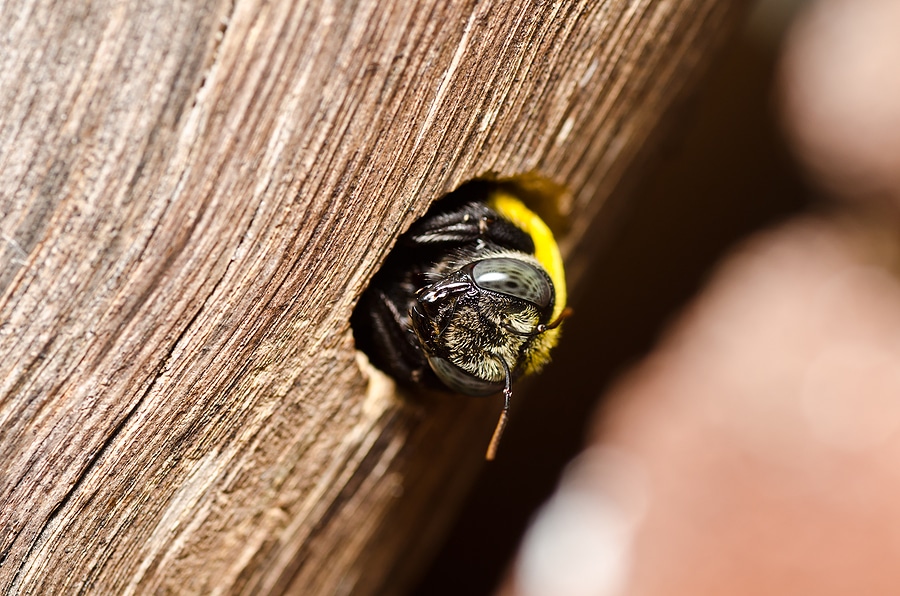
Carpenter bees bore perfectly circular holes into unpainted or weathered wood to create nesting galleries. Fascia boards, eaves, deck railings, pergolas, and wooden porch ceilings are all common targets. The initial hole is small. The gallery excavated inside the wood can extend several inches. Over multiple seasons, the same galleries get reused and extended, and the structural impact on affected wood members compounds year over year.
What Are the Limitations Traps Cannot Overcome?
Wooden carpenter bee traps work by positioning a dark entry hole above a collection chamber, simulating the appearance of an existing nest. Some bees do enter and become trapped. The problem is coverage. A single trap addresses a limited area around its placement point. Carpenter bee activity on a typical home spans multiple elevations, multiple structural members, and multiple compass exposures. One or two traps cannot intercept a population distributed across an entire property perimeter.
Can Placement Errors Reduce Effectiveness?
Trap placement matters more than most product instructions convey. Traps hung in the wrong location, too far from active boring sites, at the wrong height, or in areas with competing light conditions produce significantly lower capture rates. Without understanding where carpenter bees are actively nesting versus where they are foraging, trap placement becomes largely guesswork. Misplaced traps can spend an entire season collecting nothing while active boring continues nearby.
Why Does Trapping Not Address the Existing Galleries?
Even an effective trap only captures bees in flight. It does nothing to address the galleries already excavated in the wood. Unsealed galleries attract new carpenter bee activity the following season, regardless of how many bees were captured the previous year. Managing carpenter bees effectively requires addressing both the active population and the structural conditions that attract returning bees.
Ready for the Full Picture?
Wagner Pest Solutions serves homeowners throughout Glendale, AZ, with professional carpenter bee management alongside ant control, scorpion control, and bird control to protect your property from every direction. Request service at (623) 466-6752 and get a professional assessment of what is actually happening around your home.